Philodendron Types: A Comprehensive Guide
“Nature always wears the colors of the spirit” – Ralph Waldo Emerson perfectly captures the essence of philodendrons. These tropical plants add vibrant green beauty to indoor spaces. They have won the hearts of plant lovers everywhere, offering a wide range of varieties for every home and garden.
Philodendrons are more than houseplants; they’re living art pieces that bring tropical elegance to your home. They come in compact, trailing varieties and dramatic climbing types. Whether you’re an experienced plant parent or just starting, knowing the different philodendron types helps you find the perfect plant for your space.
Each philodendron variety has its own charm, with unique leaf shapes, growth patterns, and care needs. Their adaptability and beautiful foliage make them a favorite among indoor gardeners. They’re perfect for those looking for low-maintenance yet striking plants.
Key Takeaways
- Philodendrons offer incredible variety for indoor spaces
- Plants range from compact to dramatic climbing varieties
- Suitable for both experienced and novice plant enthusiasts
- Each variety has unique leaf shapes and growth patterns
- Tropical plants that enhance interior design aesthetics
Understanding the Philodendron Family: Origin and Classification
Philodendrons are amazing tropical plants loved by many. They have a rich history and unique traits. Let’s dive into the world of philodendron classification and see what makes them unique.
Botanical Classification and Natural Habitat
Philodendrons belong to the Araceae family, known for their special spadix and spathe. They come from the rainforests of Central and South America. Each species has found its own spot in the rainforest, from the ground to the trees.
- Family: Araceae
- Genus: Philodendron
- Native regions: Central and South America
- Ecosystem: Tropical rainforests
Growth Patterns and Plant Characteristics
Philodendrons grow in two main ways: climbing and non-climbing. Climbing types use aerial roots to climb up, while non-climbing ones stay small. They have big, shiny leaves that come in many shapes and sizes.
| Growth Type | Characteristics | Examples |
|---|---|---|
| Climbing | Uses aerial roots, can grow on supports | Heartleaf Philodendron |
| Non-Climbing | Compact growth, self-supporting | Birkin Philodendron |
Historical Background and Discovery
European botanists first wrote about philodendrons in the early 19th century. Explorers and collectors were drawn to these plants. They brought them back to gardens, starting a worldwide interest in philodendrons.
- First documented: Early 19th century
- Primary explorers: European botanists
- Initial discovery: South American rainforests
Types of Philodendron: Climbing vs Non-Climbing Varieties
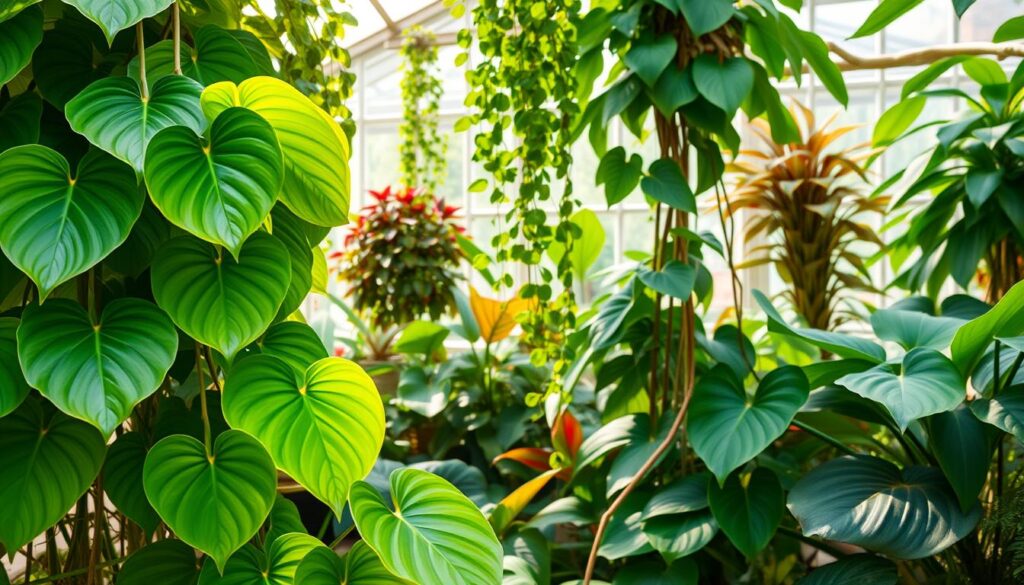
Philodendron varieties have two main growth habits: climbing and non-climbing. Knowing about these types helps you pick the right plant for your space.
Climbing philodendrons are adventurous. They grow by attaching to surfaces like trees or trellises. They have long, thin leaves and are great for hanging baskets.
- Popular climbing indoor philodendron varieties include:
- Heart-Leaf Philodendron
- Brasil Philodendron
- Micans Philodendron
Non-climbing philodendrons grow upright and compact. They have big, broad leaves and are perfect for gardens or indoor spots.
- Notable non-climbing philodendron varieties include:
- Philodendron Xanadu
- Philodendron Hope
- Philodendron Birkin
Think about your space and style when picking a philodendron. Climbing types add a flowing look, while non-climbing ones bring structure. Both can do well in similar conditions, making them great for any plant collection.
Most Popular Philodendron Species for Indoor Growing
Many people love growing philodendron plants indoors. These plants add beauty and life to homes. They are easy to care for, making them great for both new and experienced plant owners.
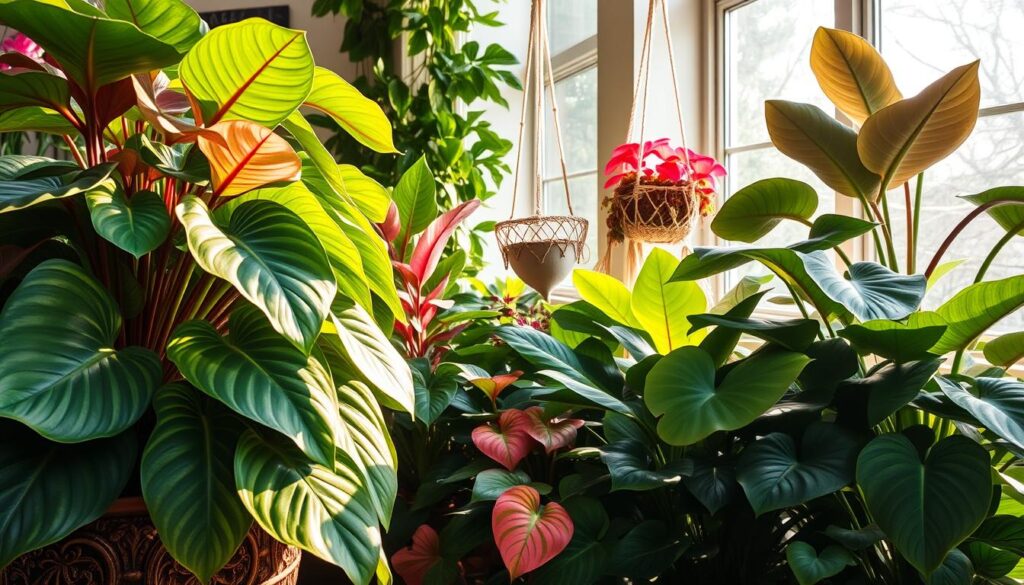
These indoor philodendron species are loved for their beauty and ability to adapt. They come in many shapes and sizes, fitting any home decor. Whether you want something small or a big statement piece, there’s a philodendron for you.
Heart-Leaf Philodendron Care Tips
The Heart-Leaf Philodendron is a favorite indoor plant. It’s small and grows well in hanging baskets or on shelves. Here are some tips to care for it:
- Provide indirect bright light
- Maintain consistent moisture without overwatering
- Keep temperatures between 60-80°F
- Use well-draining potting mix
Pink Princess Philodendron Maintenance
The Pink Princess is known for its beautiful leaves. It needs special care to keep its colors bright. It thrives in bright, indirect light and needs careful watering.
Birkin Philodendron Growing Guide
The Birkin Philodendron is loved for its white pinstripes on green leaves. To grow it well, follow these tips:
- Moderate humidity levels
- Avoid direct sunlight
- Regular but light fertilization
- Consistent warm temperatures
Learning about these popular philodendron kinds helps you grow a beautiful indoor plant collection. Your home will look amazing with these plants.
Rare and Exotic Philodendron Varieties
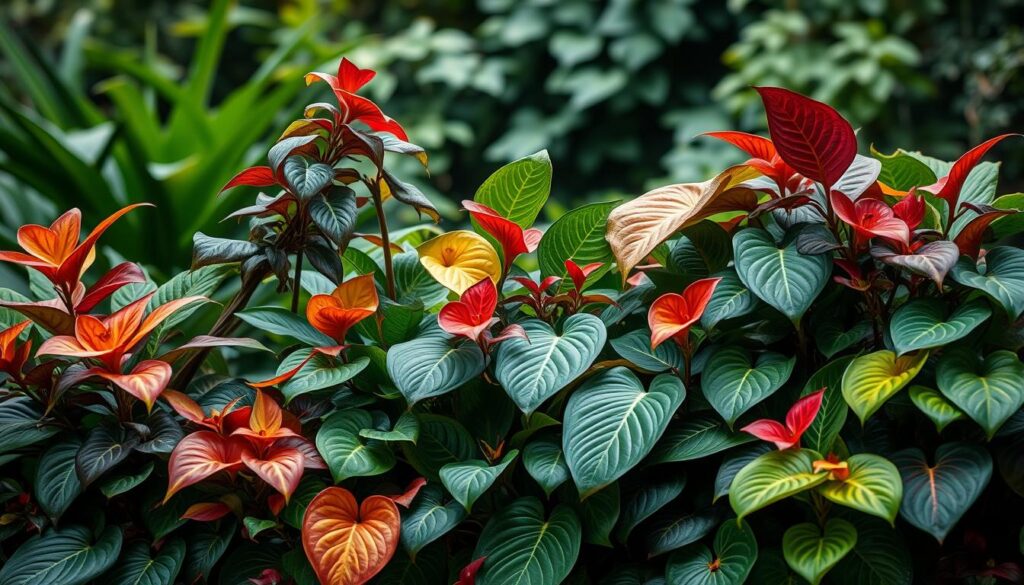
Exploring rare philodendron types opens a world of unique and stunning plants. These special philodendron hybrids are a dream for plant lovers. They offer a chance to own truly unique botanical wonders that go beyond regular houseplants.
Some of the most sought-after rare philodendron varieties include:
- Philodendron White Princess – Known for its stunning variegated white and green leaves
- Philodendron Spiritus Sancti – An incredibly rare species with elongated, dramatic leaves
- Philodendron Black Cardinal – Featuring deep, dark burgundy foliage
- Philodendron Florida Ghost – Unique white-colored new growth that transitions to green
- types of philodendron
When looking at philodendron hybrids, collectors should think about a few important things. These exotic plants add a special touch to any collection:
| Rare Variety | Difficulty Level | Price Range |
|---|---|---|
| White Princess | Moderate | $150-$300 |
| Spiritus Sancti | Extremely Challenging | $1,500-$5,000 |
| Black Cardinal | Easy | $50-$100 |
| Florida Ghost | Challenging | $300-$700 |
Growing rare philodendron types needs special knowledge and effort. You’ll need to give them the right conditions. This includes the right humidity, filtered light, and careful watering. While it’s hard, the joy of caring for these plants is worth it for true plant lovers.
Essential Care Guidelines for Different Philodendron Species
To grow healthy philodendron varieties, you need to know their specific care needs. Each type of philodendron has its own needs that can affect their survival at home. By following these essential care guidelines, you can create the perfect environment for your tropical plants.
Light and Temperature Requirements
Philodendron varieties need specific light conditions to thrive. Most prefer bright, indirect sunlight, similar to their natural habitat. Direct sunlight can harm their leaves, causing scorching and discoloration.
- Ideal temperature range: 60-80°F (15-27°C)
- Avoid cold drafts and sudden temperature changes
- Maintain consistent warmth for optimal growth
Watering and Humidity Needs
Proper watering is key for philodendron health. These plants like consistent moisture but can’t handle waterlogged soil. Check the soil moisture before watering to prevent root rot and encourage strong growth.
| Philodendron Type | Watering Frequency | Humidity Preference |
|---|---|---|
| Heart-Leaf Philodendron | Once per week | 50-60% humidity |
| Pink Princess Philodendron | Every 7-10 days | 60-70% humidity |
| Birkin Philodendron | Every 5-7 days | 65-75% humidity |
Soil and Fertilization Tips
Choosing the right soil mix and fertilization strategy is crucial. A well-draining, nutrient-rich soil supports healthy roots and overall plant vigor.
- Use a peat-based potting mix with good drainage
- Fertilize during growing season (spring and summer)
- Apply balanced, water-soluble fertilizer monthly
Common Problems and Troubleshooting for Philodendron Plants

Growing different philodendron species can be rewarding, but even experienced plant lovers encounter challenges. Recognizing and addressing common issues quickly helps maintain the health of your philodendron cultivars.
Pest infestations represent a significant threat to philodendron plants. Spider mites, mealybugs, and scale insects can quickly damage your plant’s delicate foliage. Watch for telltale signs like tiny webs, white cottony clusters, or small brown bumps on stems and leaves.
- Spider mites: Tiny webbing between leaves, yellowing spots
- Mealybugs: White cotton-like clusters in leaf joints
- Scale insects: Brown bumps on stems and leaf undersides
Environmental stress can also impact different philodendron species. Yellowing leaves might indicate overwatering, while brown leaf edges could signal low humidity or incorrect light exposure. Each philodendron cultivar has unique care requirements, so understanding your specific plant’s needs is crucial.
Preventative care remains the best strategy for maintaining healthy philodendrons. Regular inspection, proper watering, appropriate light conditions, and occasional pest treatments can help your plants thrive.
- Check plants weekly for early signs of problems
- Maintain consistent humidity levels
- Use neem oil for natural pest control
- Quarantine new plants before introducing them to your collection